What are confusing verbs and why do English learners mix them up?
Confusing verbs are pairs of English verbs that learners frequently use incorrectly because they share similar meanings, translations, or grammatical forms. In many languages, a single word covers both meanings — for example, Spanish uses "hacer" for both "make" and "do", and German uses "sagen" for both "say" and "tell". This L1 interference is the primary reason learners struggle with these pairs.
Research from the Cambridge Learner Corpus shows that confusing verb errors account for a significant portion of vocabulary mistakes at the A2-B2 level. The good news is that most confusing verb pairs follow clear rules — once you learn the underlying pattern, you can apply it consistently. This page covers confusing verb pairs plus commonly mixed-up words and structures with 690 practice questions and sentences.

Core Pairs
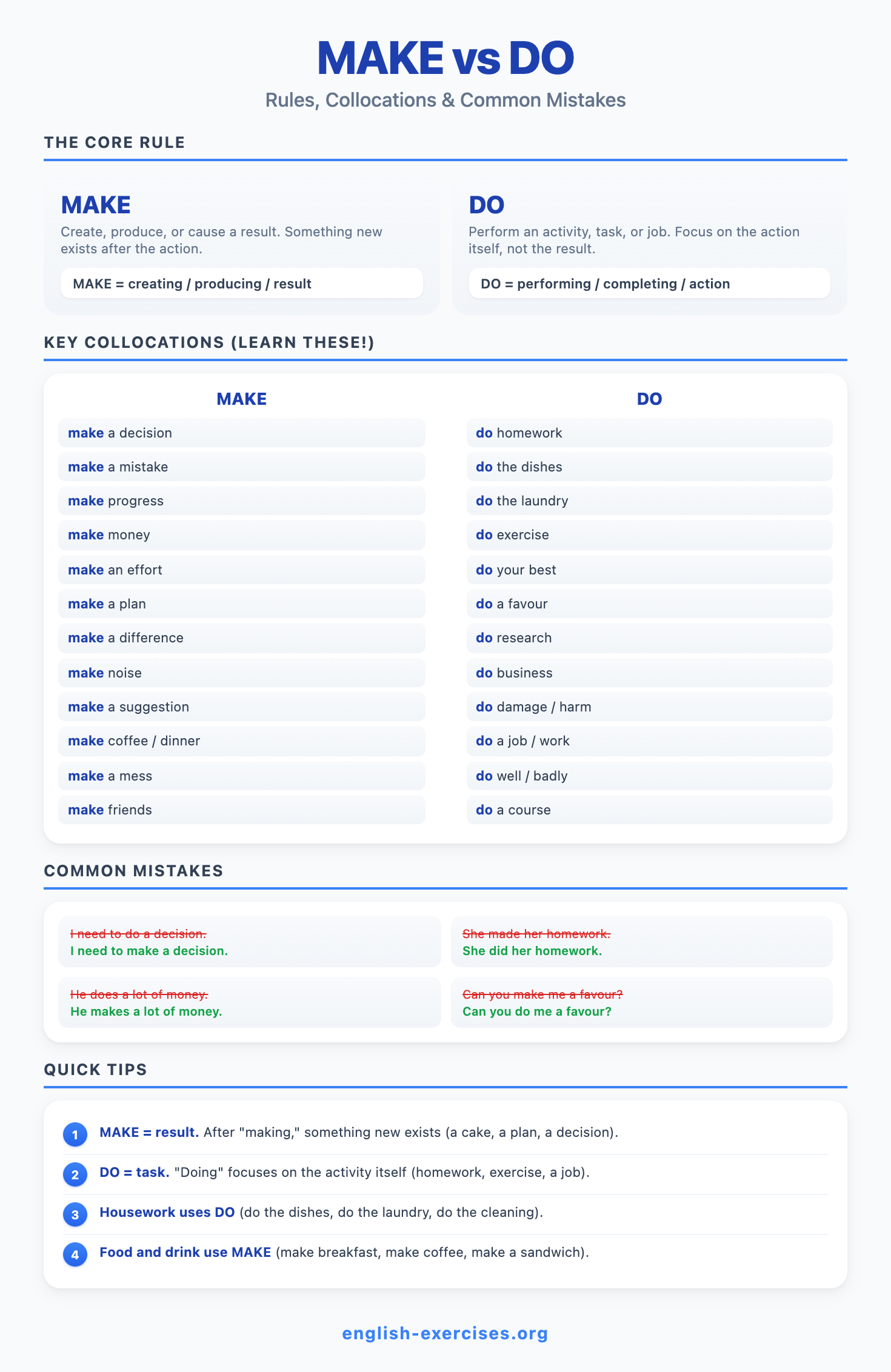
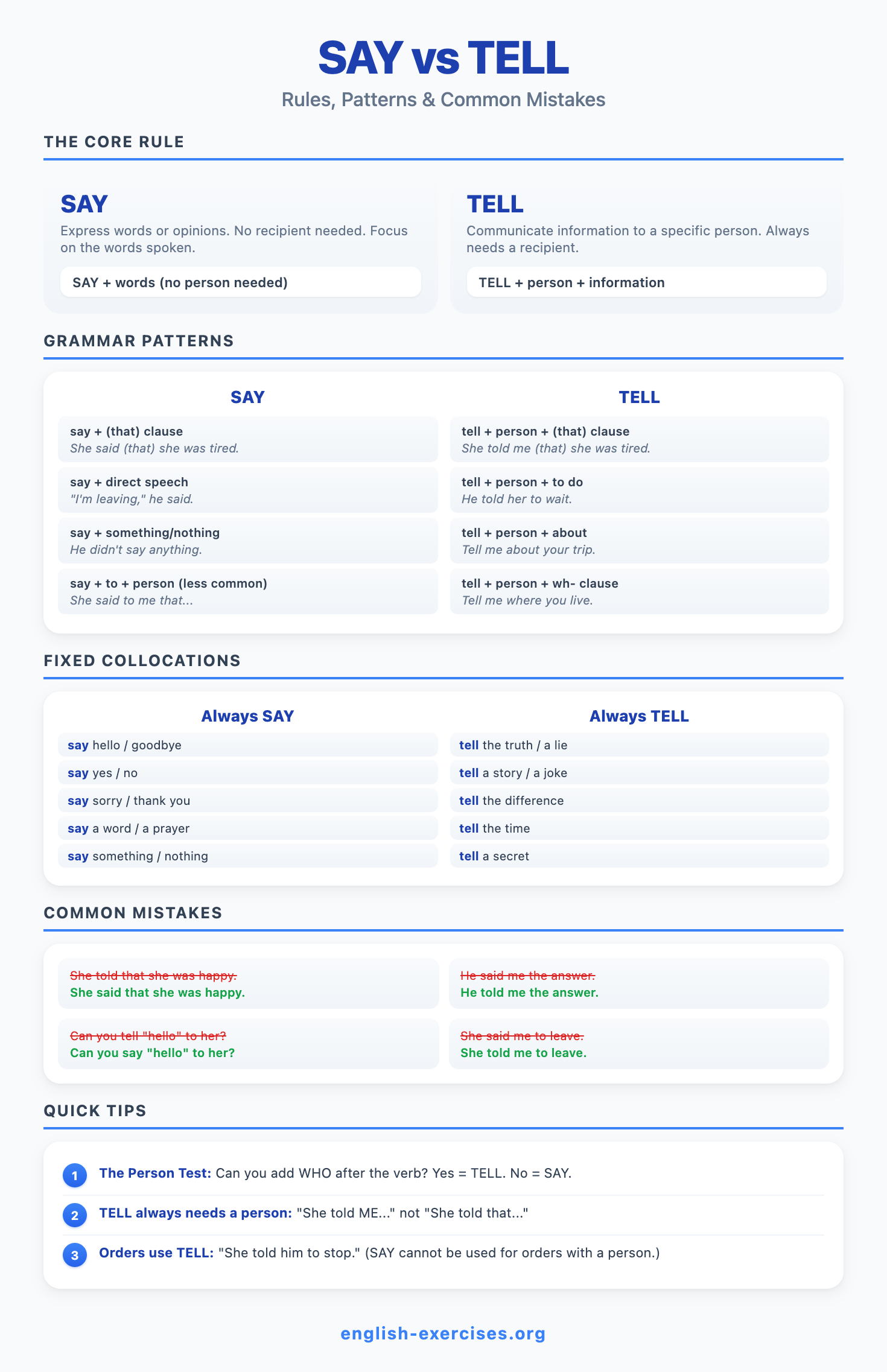
Make/Do, Say/Tell
The most frequent errors in learner writing

Direction Pairs
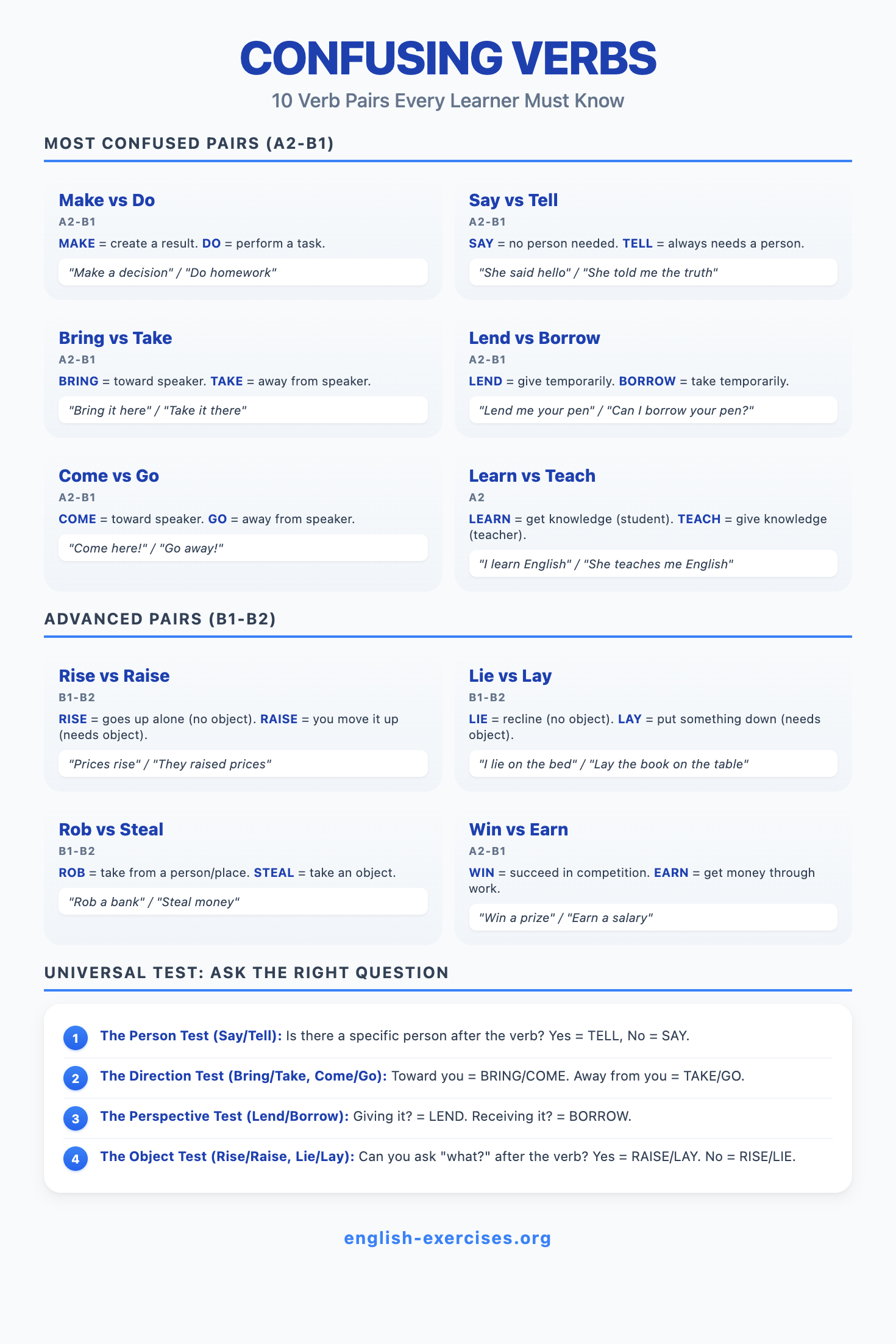
Bring/Take, Come/Go
Depend on speaker's position

Perspective Pairs
Lend/Borrow, Learn/Teach
Same action, different viewpoint

Grammar Pairs
Rise/Raise, Lie/Lay, Rob/Steal
Transitive vs intransitive differences