What Is Ellipsis and Substitution in English?
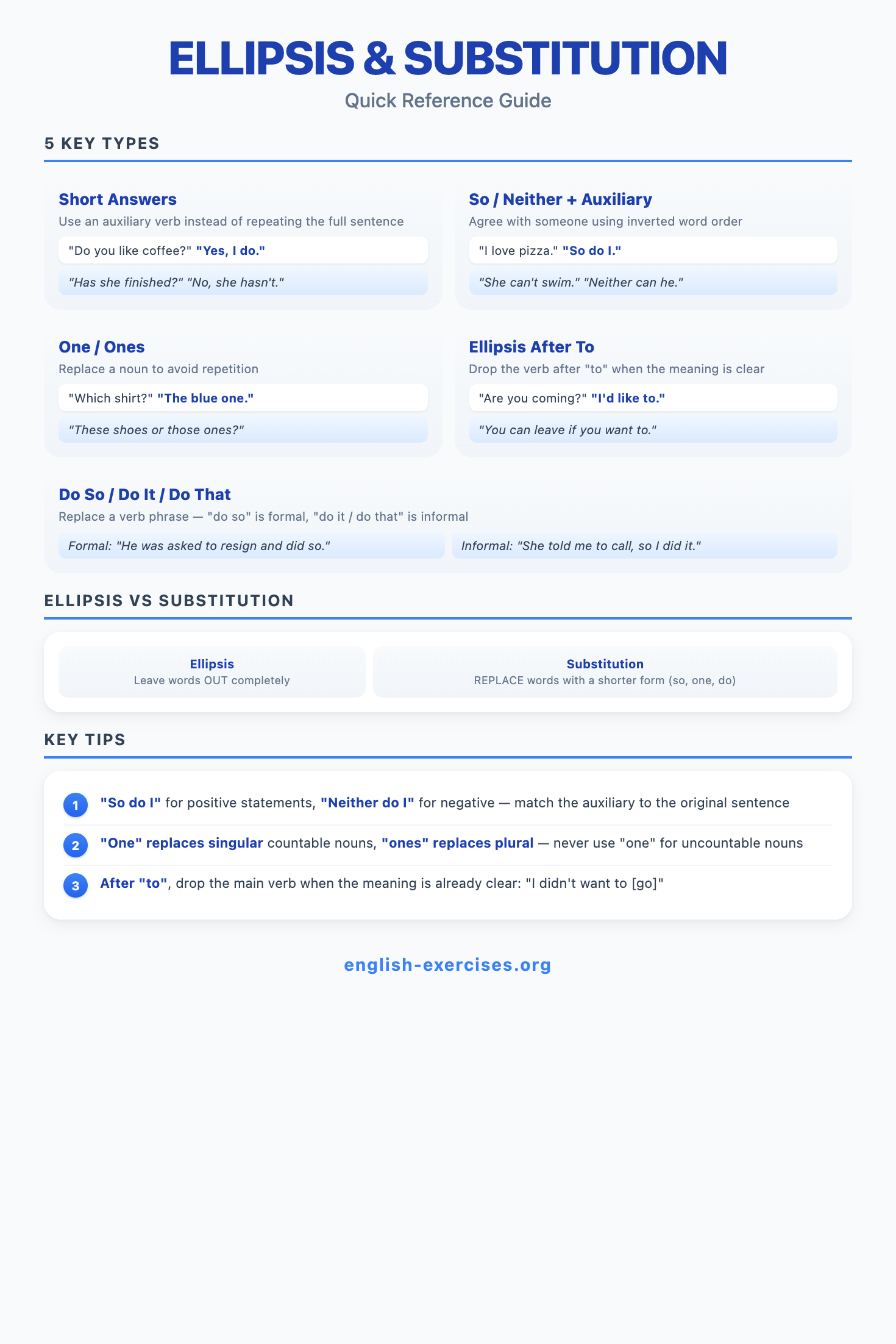
Ellipsis and substitution are two essential cohesion devices that make English sound natural and avoid unnecessary repetition. Ellipsis means omitting words that are already understood from context. Substitution means replacing words with shorter pro-forms. Both are extremely common in spoken and informal written English, and mastering them is a key step from intermediate to advanced fluency.

Ellipsis — Omit the words
Words are left out entirely because the context makes the meaning clear.
"Are you coming?" "I'd like to." (= to come)
Substitution — Replace the words
Words are replaced by a shorter pro-form to avoid repetition.
"Which bag do you want?" "The red one." (= bag)
Why Do Ellipsis and Substitution Matter?
- •They make you sound fluent rather than robotic or repetitive.
- •They are essential for B2+ writing: cohesion and coherence are assessed in IELTS and Cambridge exams.
- •Native speakers use them constantly — misunderstanding them leads to confusion.