What Are Participle Clauses?
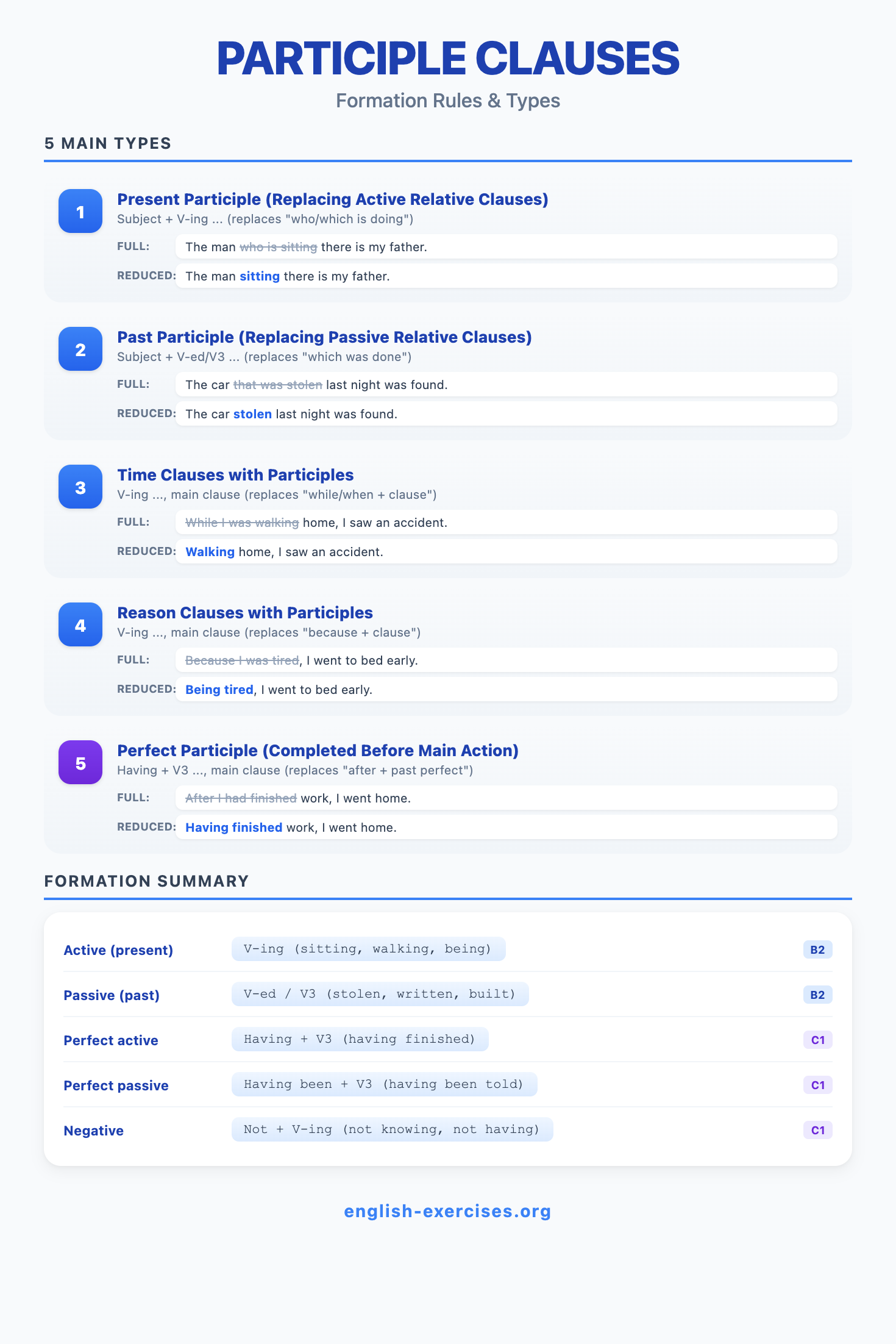
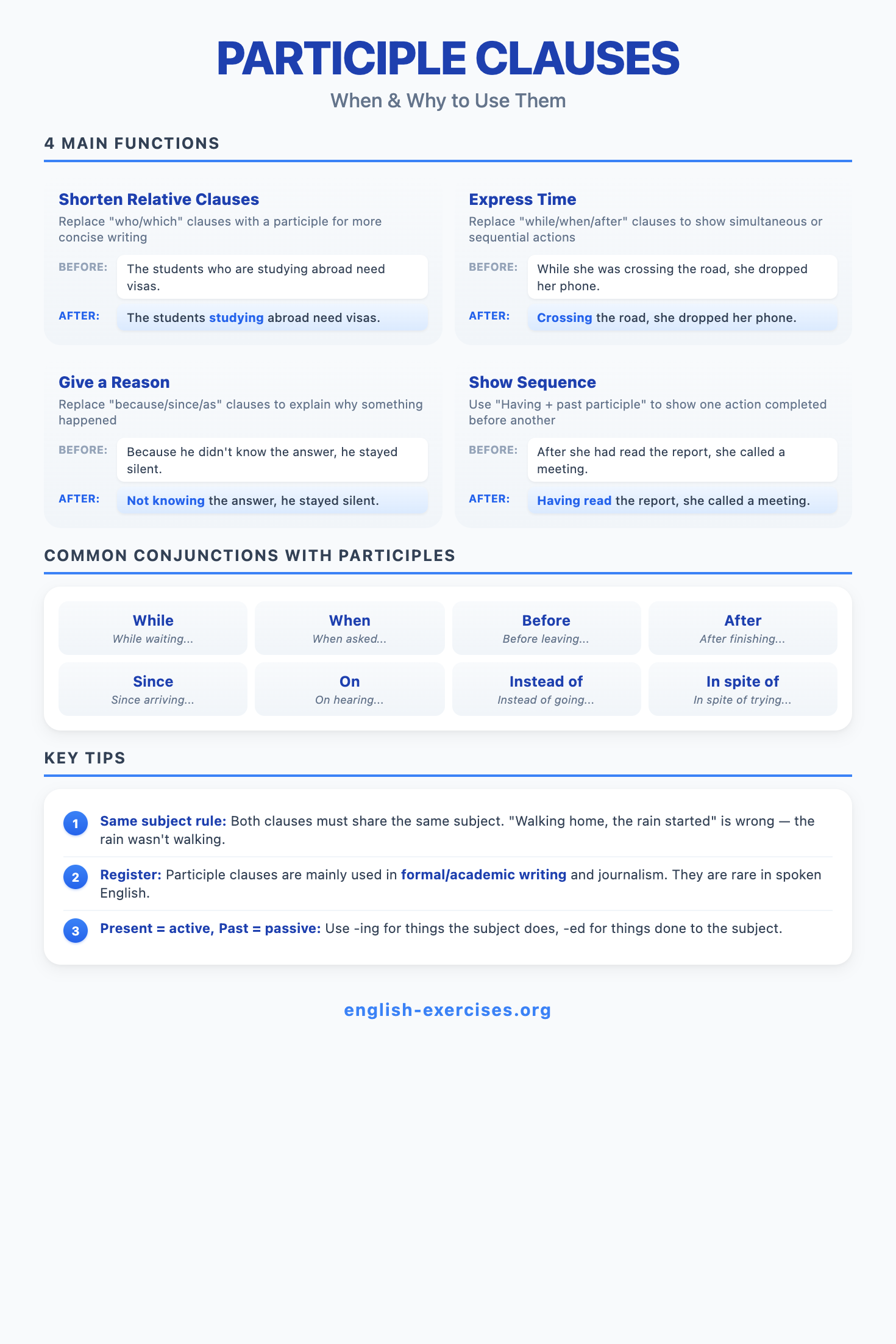
Participle clauses are shortened subordinate clauses that use a participle form (-ing, -ed/V3, or having + V3) instead of a full finite verb with a subject. They allow you to combine two ideas into one sentence, making your English more concise and natural-sounding. Participle clauses are especially common in written English, academic papers, and journalism.

Present Participle (-ing)
Active meaning — the subject does the action
"Walking to school, I met an old friend."

Past Participle (-ed/V3)
Passive meaning — the subject receives the action
"Written in 1605, the play is still popular."

Perfect Participle (Having + V3)
Completed action before the main clause
"Having finished dinner, we went for a walk."

Perfect Passive (Having been + V3)
Passive action completed before the main clause
"Having been warned, he drove carefully."
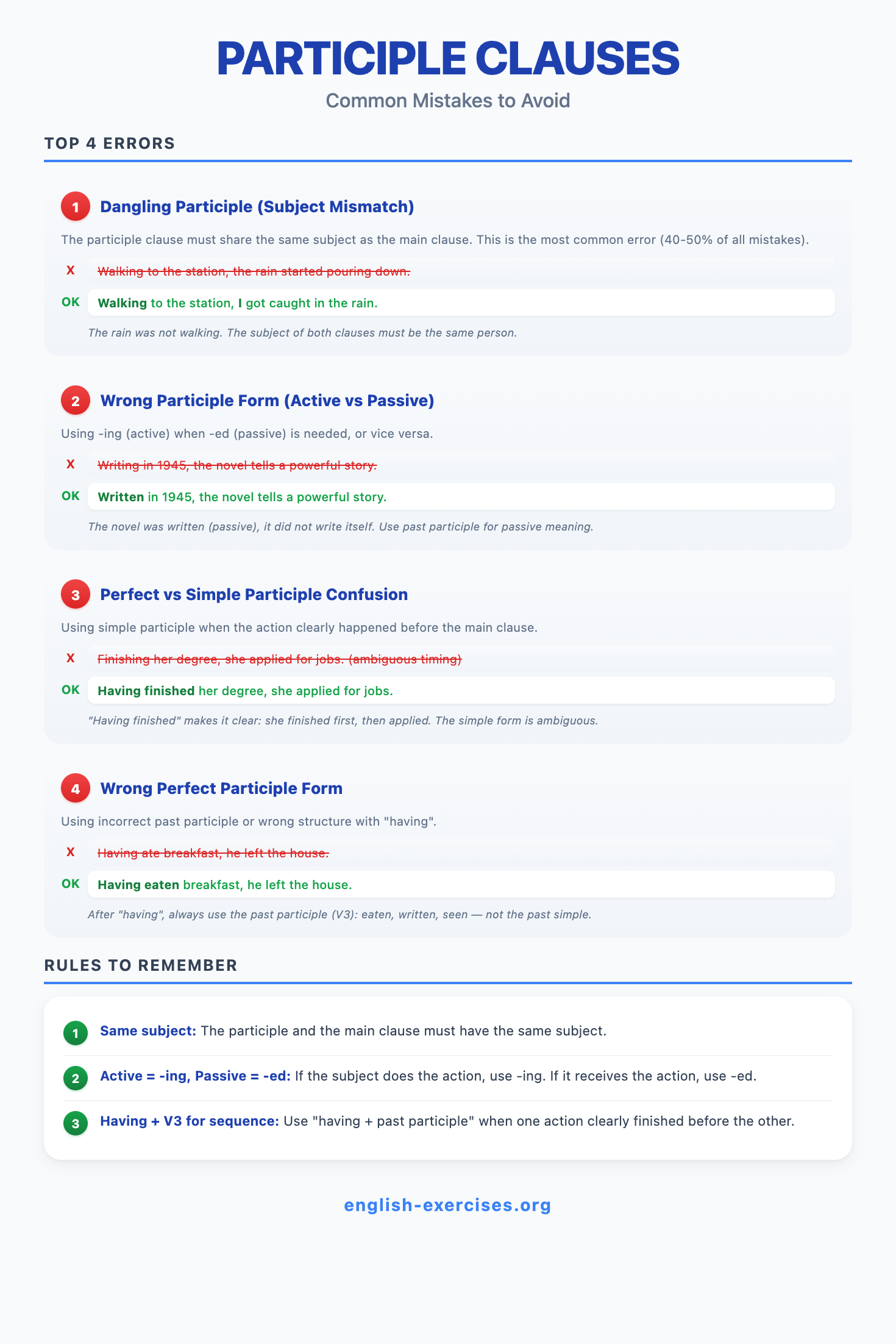
Key rule: The subject of the participle clause must be the same as the subject of the main clause. When this rule is broken, you get a "dangling participle" — one of the most common errors in English writing.